A diabetic patient receives a brochure on balanced eating written only in French, with recommendations based on typical meals that do not match either their culinary habits or their budget. They put it away in a drawer.
This kind of situation is frequently encountered in healthcare facilities and community associations. It encapsulates the gap between health education as conceived in institutions and the reality on the ground.
Improving one’s lifestyle through health education first requires understanding what this term concretely encompasses, beyond slogans. And above all, identifying what truly works to establish new daily habits.
Cultural and socio-economic barriers: the blind spot of health education
Health education programs often start from a simple premise: transmitting knowledge is enough to change behavior. On paper, this makes sense. In practice, ignoring cultural barriers exacerbates health inequalities instead of reducing them.
Take the case of migrant populations. A mother who recently arrived in France may not be proficient in reading French, may not know the local healthcare system, and may have representations of illness that are very different from the Western biomedical model. Offering her a collective workshop on nutrition with a standardized slideshow misses the point.
The practical guide from Médecins du Monde on health education emphasizes the necessity of gathering information from the target population before designing a project. Priorities are not defined from an office: they are built with the people concerned. This is fundamental, yet it is too often overlooked in institutional approaches.
To learn everything about Santéducation, one must first accept that health education does not have a single audience. Feedback on this point varies depending on the context, but one constant remains: adapting the message to the audience’s experiences radically changes the program’s effectiveness.

Daily lifestyle: what health education concretely changes
We often talk about lifestyle as a block: diet, sleep, physical activity, stress management. Health education allows this block to be broken down into specific actions tailored to each situation.
Diet and learning benchmarks
In schools, food education workshops do not just involve reciting food groups. The most effective programs have children cook, let them taste foods they wouldn’t spontaneously buy, and involve families.
Learning by doing instills habits better than a lecture. A child who has prepared a soup with seasonal vegetables is more likely to ask for it at home than a child who has read a sheet on vitamins.
Mental health and risk prevention
Mental health is now an integral part of health education projects in schools. We no longer talk solely about physical illnesses. Programs that work incorporate discussions about stress, sleep, and screens, without moralizing.
The educational health pathway established by the Ministry of National Education articulates prevention, protection, and education. The goal is not to add another subject, but to integrate these issues into school life.
Digital programs and adult health education
Since the pandemic, online health education programs have multiplied. The report from Santé publique France on digital health education published in February 2025 documents a marked decrease in risk behaviors among participating adults, particularly in rural France.
This result is not trivial. Adults in rural areas often have limited access to health professionals. A well-designed online program, with short modules and regular reminders, can fill part of this gap.
The WHO documented in its report “Digital Health Education Trends 2025” the increasing integration of personalized chatbots in health education programs. These tools help in adopting daily hygiene routines by sending reminders tailored to the user’s profile.
However, digital solutions do not solve everything. Those most distant from the healthcare system are often the least connected. A digital program without human support risks excluding those who need it most.
Launching a health education project: the steps that make a difference
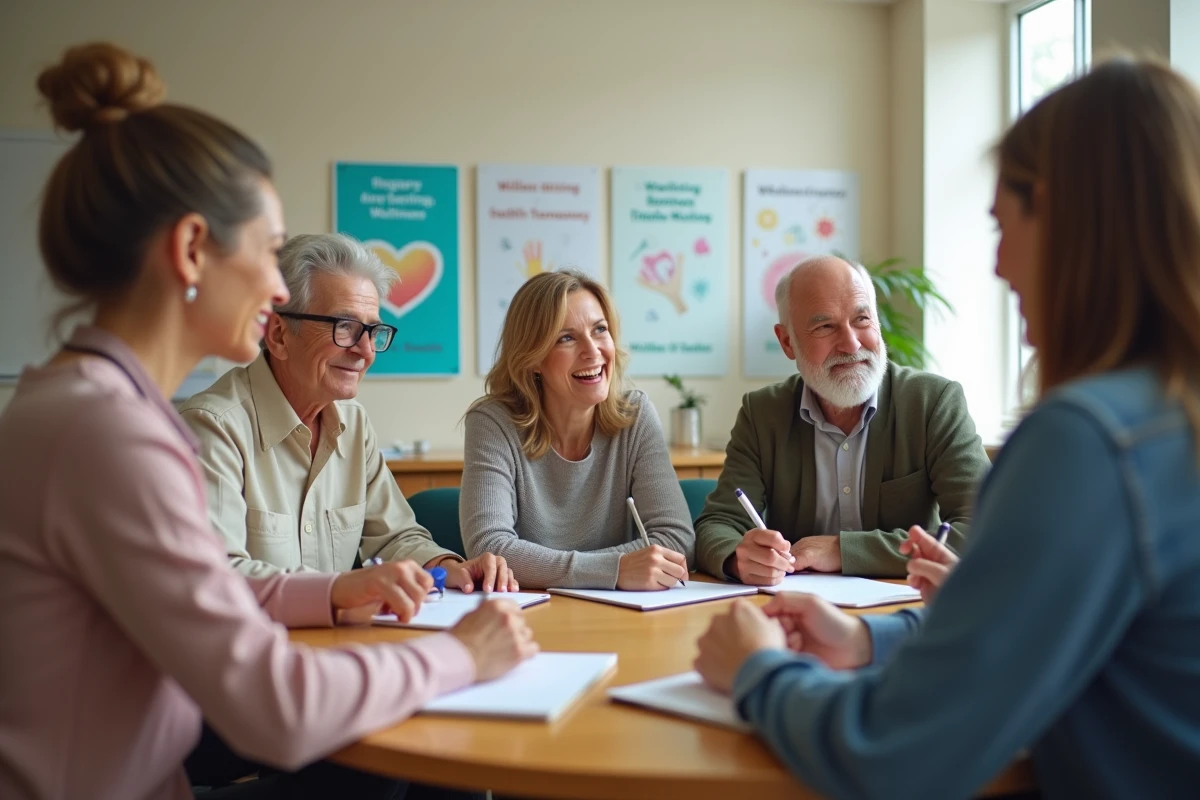
Whether in a school, an association, or a healthcare facility, an effective health education project relies on a few operational principles.
- Start with a local diagnosis: gather the real needs of the target population before choosing themes. One does not impose a national program without adapting it to the context.
- Define measurable objectives: “improve lifestyle” is too vague. “Increase the frequency of fruit consumption among children at school X over a quarter” provides a clear direction.
- Involve participants from the design stage: participatory animation techniques (role-playing, discussion groups, cooking workshops) generate more engagement than a top-down lecture.
- Evaluate and adjust: a project without evaluation does not allow one to know what worked. Regular feedback, even informal, helps correct the course.
The quality of a project is measured less by its ambition than by its adaptability. A well-calibrated small workshop in a community center can have more impact on participants’ lifestyles than a national communication campaign.
Health education in schools: beyond disease prevention
In schools, health education goes beyond simple prevention. It touches on the construction of autonomy. A child who learns to identify their signs of fatigue, to understand why we wash our hands, to verbalize a difficult emotion, develops skills that will follow them throughout their life.
School remains the most effective place to reach all children, including those whose families do not have access to health information through other channels. This is precisely why school projects must be designed with particular attention to children from disadvantaged backgrounds or migrant families.
The most impactful actions combine classroom learning and parental involvement. When a school organizes a collective breakfast with families to discuss nutrition, it creates a dialogue space that did not exist before. This type of action is low-cost and produces lasting effects on eating habits.
Health education is not an additional school subject nor a publicity campaign. It is a grassroots effort, slow, that requires listening and adaptation. The programs that produce results are those that start from the people, not from brochures.