
What is legal sativa hemp and what are its properties and differences from indica hemp.
The fundamental division between types of cannabis was first introduced by the French biologist Jean-Baptiste Lamarck in 1785.
Lamarck notably conducted a study on the remarkable effects of cannabis in two different regions, one from the Middle East and the Maghreb (Turkey, Afghanistan, and Morocco) and the other from equatorial areas (Colombia, Mexico, Thailand, and Southeast Asia).
The distinction recognized by the biologist led to the classification in use today between Cannabis Sativa and Cannabis Indica, each having particular characteristics that define not only the psychoactive effects but also the phenotype.
The law of December 2, 2016, n. 242, allows the free cultivation of legal hemp (Cannabis sativa), that is, with a THC (tetrahydrocannabinol) content of less than 0.2%.
Cultivation is made possible by certified seeds specially selected to ensure that the allowed THC threshold is not exceeded.
-
GreenHouse | CBD CBDA < 18%
Grams 3 5 10 20 50 100
- New indoor batch
| CBD CBDA < 23%
Grams 3 5 10 20 50 100
-
Glasshouse | CBD CBDA < 19.5%
Grams 3 5 10 20 50 100
Glasshouse | CBD CBDA < 18%
Grams 3 5 10 20 50 100
The innovation of cultivating legal sativa hemp comes from the multiplicity of its uses, not only in textiles but also in food, medicine, biotechnology, green construction, etc. The plant’s resilience and high yield are some of the factors for which it appears among innovative crops, guaranteeing tax incentives for producers and annual rewards, along with state and regional incentives.
Legal Sativa Hemp and Indica Hemp: the differences
Sativa Hemp
Legal sativa hemp in Italy is characterized by remarkable height growth, with specimens that can reach 5 meters tall, characterized by a slender stem and leaf.
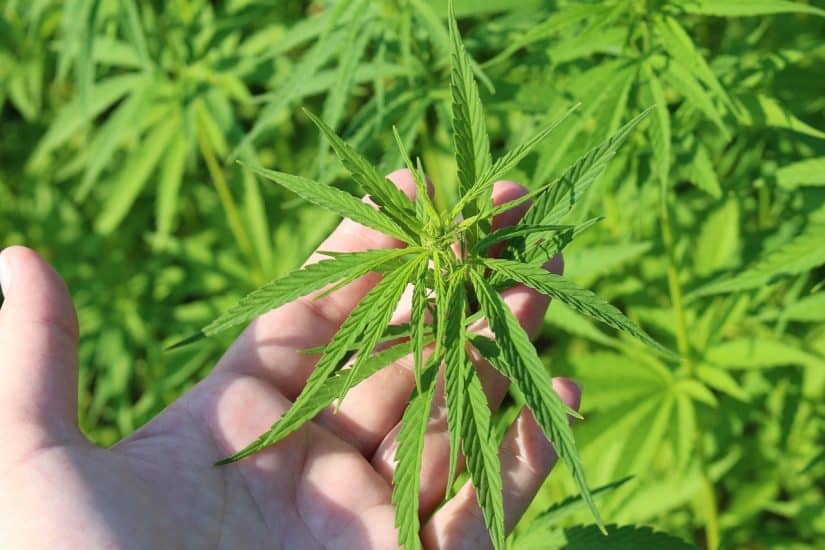
Generally, due to its large size, it requires more space between one plant and another.
This type of marijuana develops buds along the branches rather than at the nodes, which ensures a higher yield if grown for cannabis seeds.
The vegetative phase is characterized by rapid growth, while the flowering phase is longer; overall, the harvest duration can vary from 60 to 90 days: it is sown in March/April and the harvest usually takes place in August.
Legal cannabis is particularly appreciated in the medical field for its stimulating effects, recommended as an antidepressant and treatment for ADHD (attention deficit hyperactivity disorder).
Indica Hemp
Indica hemp, unlike sativa cannabis, is characterized by a short stem, rarely exceeding two meters, and a bushy shape, with many very dense branches. Its bushy shape and small size make it ideal for indoor cultivation and allow for a greater density of plants per square meter.
This plant develops buds at the nodes and is characterized by a longer vegetative phase than the flowering phase, with shorter harvest times than the sativa variety, usually between 45 and 65 days.
In the medical field, indica hemp is used as a pain reliever, as well as in the treatment of various dysfunctions and muscular diseases precisely because of its relaxing and sedative effect.
Main types of light hemp — Sativa type
Another fundamental distinction to make regarding legal marijuana is between dioecious and monoecious plants.
The dioecious plant is male or female, while the monoecious plant has both characteristics, bearing seeds and marijuana flowers.
The type of plant to cultivate depends on the type of product to be obtained: if one actually wants to harvest seeds, monoecious plants ensure a much higher yield (an average of 6 quintals per hectare for monoecious versus 4-4.5 for dioecious).
If, on the other hand, only biomass is to be obtained, dioecious plants are generally optimal as they are characterized by a longer stem than monoecious plants, which, on their side, are kept quite homogeneous in height, never exceeding the optimal size for harvesting.
The main types of dioecious plants are as follows:
- Carmagnola, with an average stem height of 3.5 meters, is one of the most cultivated Italian varieties as it is rich in fibers and also suitable for brick production;
- Fibranova, like Carmagnola, is suitable for Italian climates and has excellent fiber yield;
- Tiborszallasi, a Hungarian variety characterized by both excellent fiber yield, with stems reaching up to 4 meters in height, and satisfactory production of seeds and inflorescences.
Here are the main types of monoecious plants:
- Futura, a French variety that maintains an average height of 2.5 meters, designed primarily for seed production and for producing fertilizers;
- Felina, one of the most widespread in France, with good yield in fibers and seeds, born from the crossing of Kompolti (which, however, due to its high THC percentage cannot be cultivated directly) and Fibrimon;
- Uso 31, an excellent Hungarian variety for seed production, characterized by quite rapid flowering, favored by climatic differences;
- Codimono, a German variety, genetically derived from the dioecious called “superfiber” in Germany. It is characterized by very high fiber production.
Do you want to try light marijuana?
In our online store JustBob, you will find a wide range of super controlled and certified light cannabis, ready to be shipped to your home.
Don’t wait any longer: choose quality and safety, choose JustBob!
Tag: More info on CBD